Bearing #2 Thermal Scan

Image from Web (sample report)
Pillow Block Bearing
PT-103
Unknown (sample report)
August 31, 2025 at 4:45:00 PM
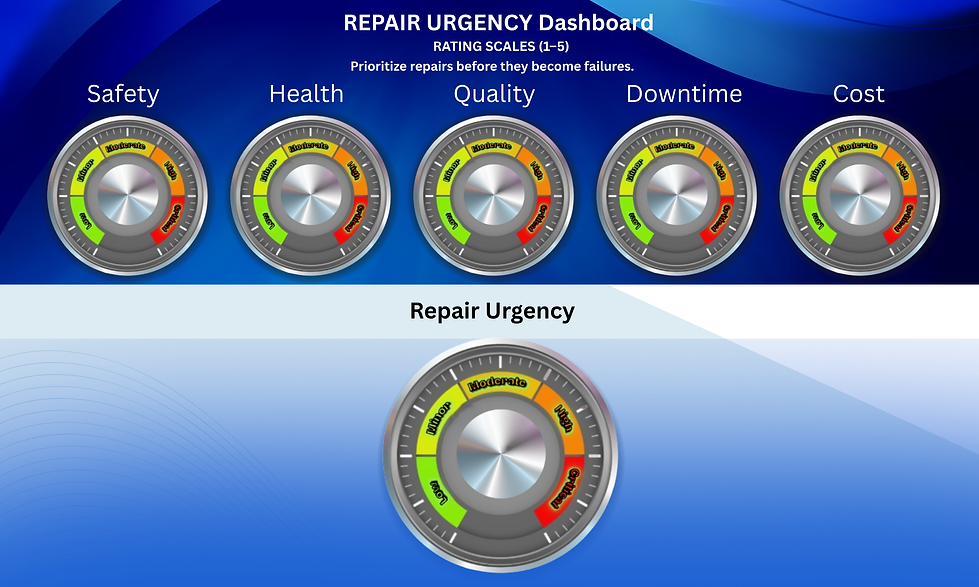
4.00
4.00
3.00
4.00
4.00
3.82


The thermal image reveals a concentrated elliptical heat signature centered at the shaft interface, indicating abnormal internal heat generation. This suggests a likely combination of internal friction and misalignment or insufficient lubrication.


Localized crescent-shaped thermal bloom concentrated along the inner race and shaft contact zone, extending radially toward the mounting flange. The pattern is asymmetric, forming a halo-like arc that indicates localized heat buildup due to friction, possible contamination, or misalignment.
1. Bright crescent-shaped bloom at shaft entrance to bearing housing.
2. Hot zone centralized along shaft centerline, likely due to friction or load imbalance.
3. Max temperature appears around 160°F+ on scale, with surrounding cooler shaft and pillow block body.
4. Distinct thermal ellipse around shaft and bearing race
5. Bright core temperatures suggest high friction or load concentration
The thermal image reveals a concentrated elliptical heat signature centered at the shaft interface, indicating abnormal internal heat generation. This suggests a likely combination of internal friction and misalignment or insufficient lubrication.

1. Misalignment between shaft and bearing.
2. Inadequate lubrication or grease breakdown.
3. Shaft loading not evenly distributed (e.g., belt tension or side loading).
4. Potential contamination or bearing seal failure.
1. Audible squealing, humming, or rough rotation under load.
2. Bearing housing warm to the touch.
3. Possible shaft vibration or irregular motor loading.
4. Early failure if left uncorrected.
1. Use laser alignment tools to validate shaft-centerline alignment.
2. Inspect grease for contamination or breakdown.
3. Check for bent shaft or excessive belt tension.
4. Inspect seal integrity and verify grease path.

1. Conduct immediate inspection of bearing, shaft alignment, and lubrication status.
2. Re-lubricate with correct grease type and volume.
3. Realign shaft-to-bearing using dial indicators or laser tools.
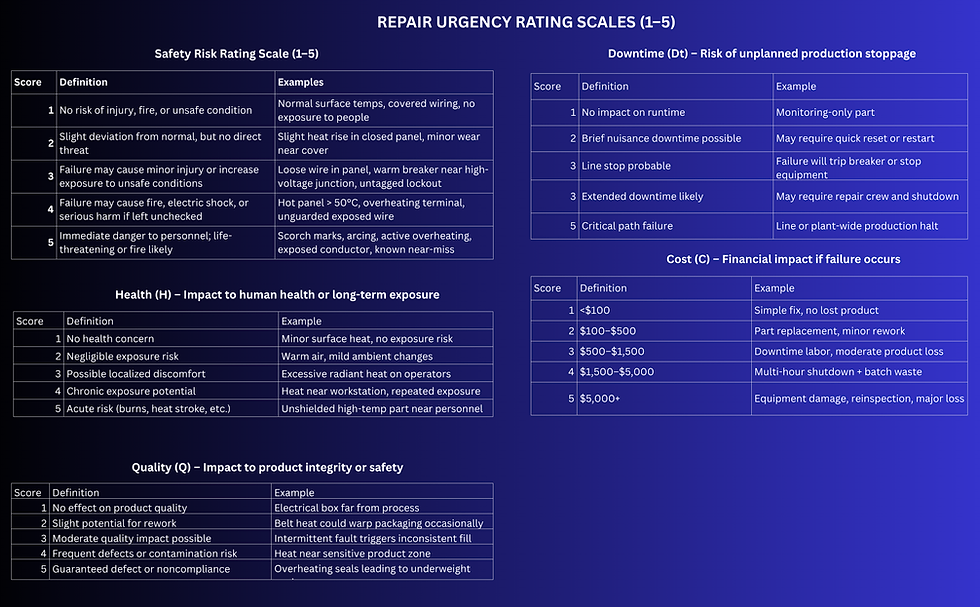
4. Schedule replacement during the next available maintenance window (preferably within 7 days).
5. Increase thermal scan frequency until resolved
6. Add desiccant breathers or seals if contamination suspected.
7. Monitor post-repair via thermal and vibration analysis.
8. Add to repair urgency tracking system with a score of 3.5 or higher
1. Misalignment between shaft and bearing.
2. Inadequate lubrication or grease breakdown.
3. Shaft loading not evenly distributed (e.g., belt tension or side loading).
4. Potential contamination or bearing seal failure.

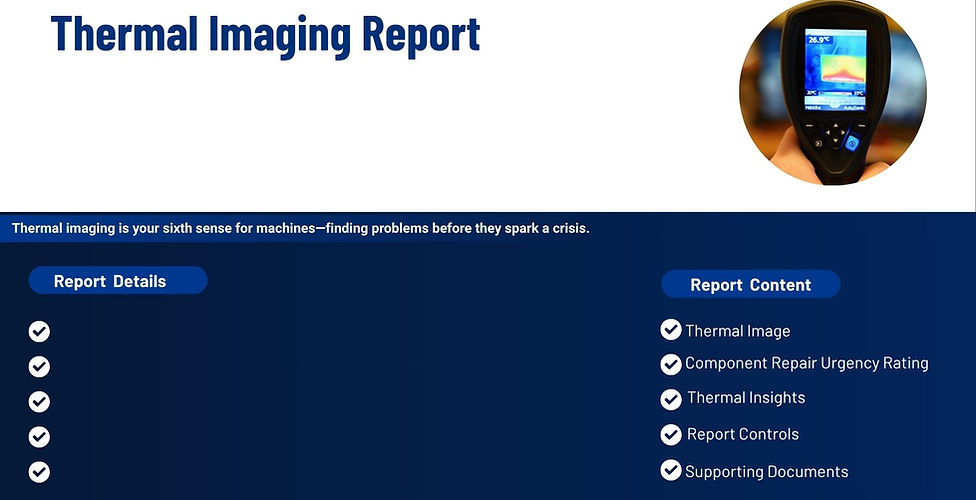
Report Controls:
This Filter controls the main report above.
Instructions:
1.) Click on the Reset button to display all reports.
2.) Select the report you are interested in by clicking in the table on the report.
3.) Click on the Filter button to update the main report.
Title | Component | Inspection Date | Signs and Symptoms | Thermal Visual Cue | Likely Issue | Thermal Image Upload |
|---|---|---|---|---|---|---|
Bearing #2 Thermal Scan | Pillow Block Bearing | 31/08/2025 | 1. Audible squealing, humming, or rough rotation under load.
2. Bearing housing warm to the touch.
3. Possible shaft vibration or irregular motor loading.
4. Early failure if left uncorrected. | 1. Bright crescent-shaped bloom at shaft entrance to bearing housing.
2. Hot zone centralized along shaft centerline, likely due to friction or load imbalance.
3. Max temperature appears around 160°F+ on scale, with surrounding cooler shaft and pillow block body.
4. Distinct thermal ellipse around shaft and bearing race
5. Bright core temperatures suggest high friction or load concentration | 1. Misalignment between shaft and bearing.
2. Inadequate lubrication or grease breakdown.
3. Shaft loading not evenly distributed (e.g., belt tension or side loading).
4. Potential contamination or bearing seal failure. |
This is your Project description. Provide a brief summary to help visitors understand the context and background of your work. Click on "Edit Text" or double click on the text box to start.