top of page
Master Reliability
What are the potential root causes for the abnormal thermal image?
What are the potential root causes for the abnormal thermal image?
What are the potential root causes for the abnormal thermal image?
Based on the signs and symptoms, thermal images, and potential root cause, identify the likely issue
What are the potential root causes for the abnormal thermal image?

Report Controls:
Title | Component | Inspection Date | Likely Issue | Signs and Symptoms | Thermal Visual Cue | How to Rule Out | Recommendations | Thermal Image Upload |
|---|---|---|---|---|---|---|---|---|
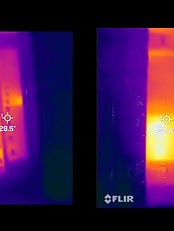
Circuit Breaker Thermal Scan | Circuit Breaker | 28/07/2025 | Loose wire termination or increased resistance at the breaker connection. Possible overload or backfeed condition from shared neutral or faulty device downstream. | • Circuit behavior issues (e.g., fan turns on when light turns off).
• Intermittent or reversed function from connected loads.
• Audible hum, mild buzzing, or light flicker in affected circuit.
• No visual signs externally, but FLIR indicates temperature anomaly. | Visible hot spot at approximately 29.5°C (85.1°C), noticeably warmer than adjacent breakers. Localized thermal bloom indicates concentrated heating, likely at the breaker terminal or lug. | • De-energize panel and check for loose terminal screw on the identified breaker.
• Verify load on the circuit, inspect for shared neutrals or recent changes in wiring.
• Swap the breaker with an adjacent one and retest (if allowed by breaker style).
• Inspect connected switch and fan/light wiring for improper routing. | Tighten breaker lug (with power off).
• Replace breaker if terminal is scorched, discolored, or suspect.
• Replace light/fan switch to eliminate internal contact failure.
• Check neutral path and confirm circuit separation if needed.
• Monitor with FLIR after repair to confirm resolution (expect 25°C under normal load). |
bottom of page