top of page
Master Reliability
What are the potential root causes for the abnormal thermal image?
What are the potential root causes for the abnormal thermal image?
What are the potential root causes for the abnormal thermal image?
Based on the signs and symptoms, thermal images, and potential root cause, identify the likely issue
What are the potential root causes for the abnormal thermal image?

Report Controls:
Title | Component | Inspection Date | Likely Issue | Signs and Symptoms | Thermal Visual Cue | How to Rule Out | Recommendations | Thermal Image Upload |
|---|---|---|---|---|---|---|---|---|
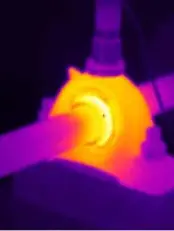
Bearing #2 Thermal Scan | Pillow Block Bearing | 31/08/2025 | 1. Misalignment between shaft and bearing.
2. Inadequate lubrication or grease breakdown.
3. Shaft loading not evenly distributed (e.g., belt tension or side loading).
4. Potential contamination or bearing seal failure. | 1. Audible squealing, humming, or rough rotation under load.
2. Bearing housing warm to the touch.
3. Possible shaft vibration or irregular motor loading.
4. Early failure if left uncorrected. | 1. Bright crescent-shaped bloom at shaft entrance to bearing housing.
2. Hot zone centralized along shaft centerline, likely due to friction or load imbalance.
3. Max temperature appears around 160°F+ on scale, with surrounding cooler shaft and pillow block body.
4. Distinct thermal ellipse around shaft and bearing race
5. Bright core temperatures suggest high friction or load concentration | 1. Use laser alignment tools to validate shaft-centerline alignment.
2. Inspect grease for contamination or breakdown.
3. Check for bent shaft or excessive belt tension.
4. Inspect seal integrity and verify grease path. | 1. Conduct immediate inspection of bearing, shaft alignment, and lubrication status.
2. Re-lubricate with correct grease type and volume.
3. Realign shaft-to-bearing using dial indicators or laser tools.
4. Schedule replacement during the next available maintenance window (preferably within 7 days).
5. Increase thermal scan frequency until resolved
6. Add desiccant breathers or seals if contamination suspected.
7. Monitor post-repair via thermal and vibration analysis.
8. Add to repair urgency tracking system with a score of 3.5 or higher |
bottom of page