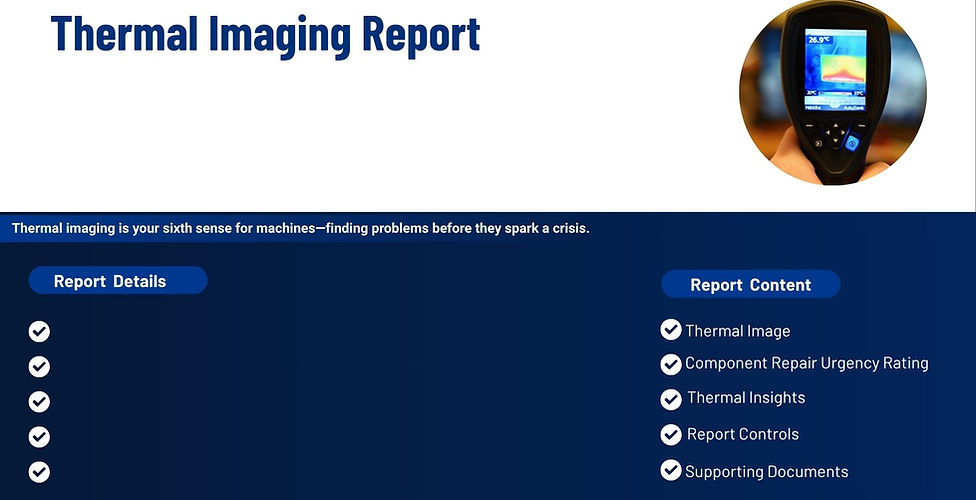
Bearing #1Thermal Scan

Unknown (sample case)
Pillow Block Bearing
C-10PB
Sample Report
July 31, 2025 at 11:15:00 AM
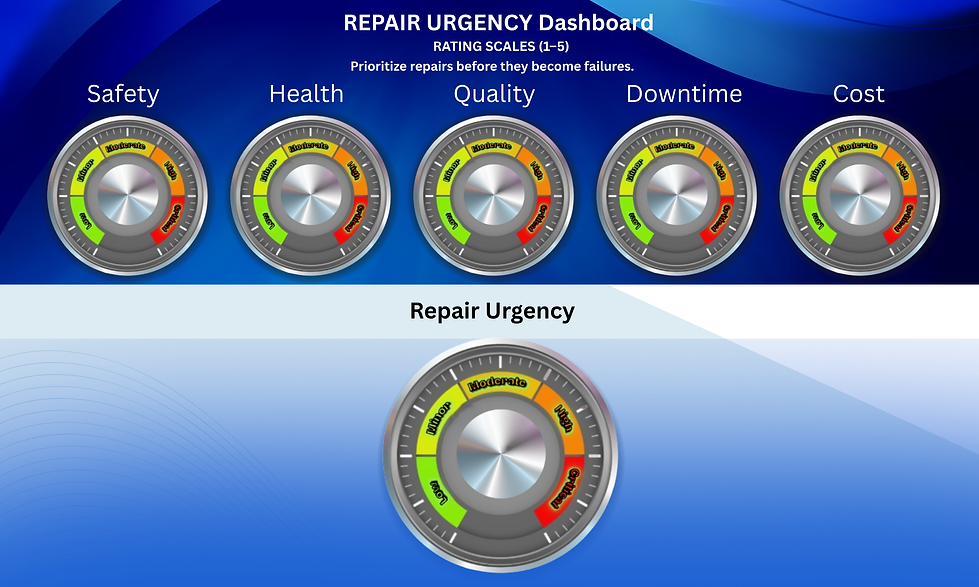
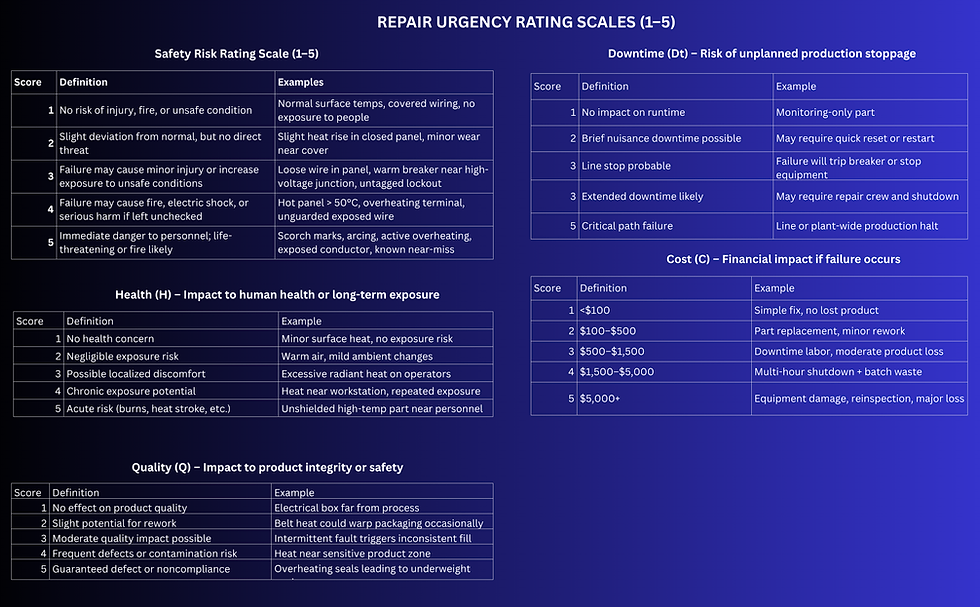
2.00
1.00
2.00
2.00
2.00
1.71


Failure of this bearing could lead to: Line stoppage, Shaft or housing damage, Secondary component failure (e.g., belts, couplings).


Localized thermal bloom concentrated at the bearing housing and mounting surface, with highest intensity at the outer race zone. The asymmetric heating pattern suggests friction or misalignment stress localized to one side of the bearing.
The image reveals a clear thermal anomaly at the center of the bearing housing, peaking at 144°F (62.2°C). The localized hotspot contrasts against the cooler surrounding areas, indicating concentrated friction or insufficient lubrication.
Failure of this bearing could lead to: Line stoppage, Shaft or housing damage, Secondary component failure (e.g., belts, couplings).

Overheating from friction due to degraded or insufficient lubrication. If left unresolved, may lead to premature bearing failure or seizure.
Surface temperature exceeds normal operational limits for this bearing class.
No visible external damage or deformation.
No known noise, vibration, or performance symptoms reported (image-only evaluation).
Use ultrasonic or vibration analysis to check for internal damage.
Visually inspect lubricant condition and quantity.
Check for signs of alignment issues (e.g., uneven wear, excessive axial load).
Compare to a baseline image under similar load conditions.
Re-lubricate bearing with correct grease grade.
Schedule follow-up thermal scan in 7–14 days.
Evaluate alignment and shaft tension.
Consider condition-based maintenance strategy with thermal and acoustic trending.
Primary Suspect: Insufficient lubrication, leading to elevated friction and thermal buildup
Alternate Possibilities:
Over-tightened shaft fit causing bearing drag
Misalignment between shaft and housing
Internal bearing wear or contamination (e.g., ingress of dust or debris)
Bearing overload due to excessive belt tension or external force

Report Controls:
This Filter controls the main report above.
Instructions:
1.) Click on the Reset button to display all reports.
2.) Select the report you are interested in by clicking in the table on the report.
3.) Click on the Filter button to update the main report.
Title | Component | Inspection Date | Signs and Symptoms | Thermal Visual Cue | Likely Issue | Thermal Image Upload |
|---|---|---|---|---|---|---|
Bearing #1Thermal Scan | Pillow Block Bearing | 31/07/2025 | Surface temperature exceeds normal operational limits for this bearing class.
No visible external damage or deformation.
No known noise, vibration, or performance symptoms reported (image-only evaluation). | The image reveals a clear thermal anomaly at the center of the bearing housing, peaking at 144°F (62.2°C). The localized hotspot contrasts against the cooler surrounding areas, indicating concentrated friction or insufficient lubrication. | Overheating from friction due to degraded or insufficient lubrication. If left unresolved, may lead to premature bearing failure or seizure. |
This is your Project description. Provide a brief summary to help visitors understand the context and background of your work. Click on "Edit Text" or double click on the text box to start.